
Pattaya · Foreign Buyer Guide
Buying property in Pattaya as a foreigner
The most accessible foreign-buyer market in Thailand, the property anchor of the Eastern Economic Corridor, and Asia's largest concentration of affordable seafront condominium inventory. A complete editorial guide for the foreign buyer.
01
Why Pattaya still matters
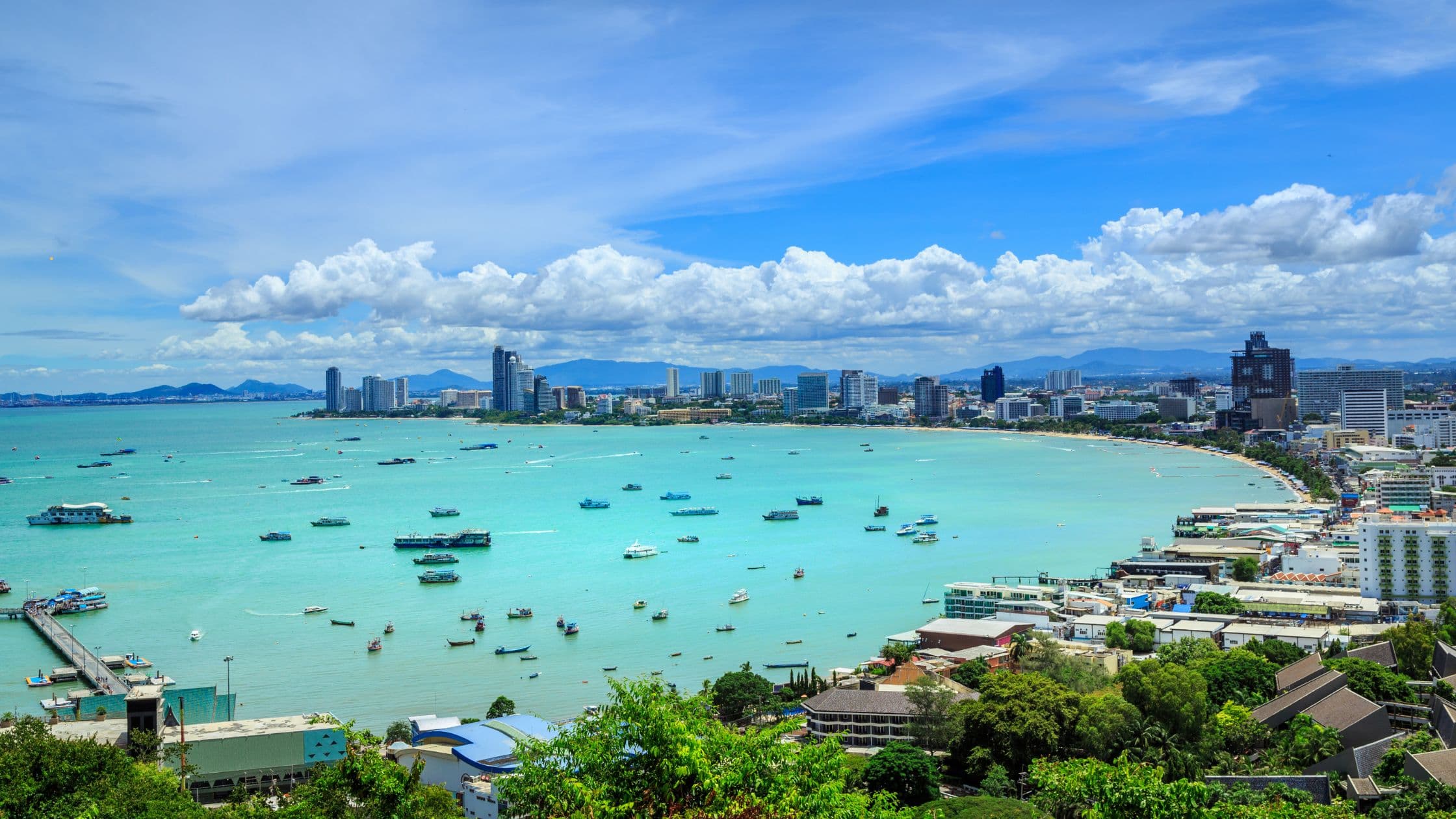
Pattaya is two hours from Bangkok by car and one hour from the U-Tapao international airport. It has long been the entry-level coastal market for foreign buyers seeking liquidity and price accessibility rather than the premium positioning of Phuket or Samui. Russian, Chinese, Korean and European purchasing has historically driven the market in roughly equal share, with the Russian cohort accelerating after 2022.
What sets Pattaya apart in the Thai property landscape is the combination of three structural factors: the highest gross yields in the country (6 to 8 percent typical for well-located condos), the largest concentration of new condominium product outside Bangkok, and the underlying Eastern Economic Corridor (EEC) investment cycle that has been reshaping the foreign-resident base toward longer-term professionals working in the corridor.
Pattaya is also Thailand's most documented foreign-buyer market in terms of professional support infrastructure. The volume of foreign-resident-oriented lawyers, accountants, visa consultants and property managers exceeds any Thai destination outside Bangkok, which simplifies the operational side of foreign-buyer ownership.
Pattaya gets dismissed by buyers who have not actually spent time here. The yields are real, the documentation is mature, and the EEC story has years of structural tailwind ahead. The challenge is choosing the right corridor.
02
The Eastern Economic Corridor story
The Eastern Economic Corridor (EEC) is Thailand's flagship investment programme, covering the three provinces of Chonburi (where Pattaya sits), Rayong and Chachoengsao. Cumulative committed investment exceeds USD 50 billion across automotive, robotics, aviation, biofuels, petrochemicals, electronics and tourism. Pattaya sits directly within the corridor and benefits from each layer of the infrastructure cycle.
Three EEC projects matter most for property buyers. First, the U-Tapao Airport upgrade is expanding the airport into Thailand's third major international gateway with full build-out capacity of over 60 million annual passengers. Second, the Bangkok-Pattaya-Rayong high-speed rail link (under construction) will reduce Bangkok-Pattaya travel time to under 45 minutes by rail. Third, the planned U-Tapao to Suvarnabhumi to Don Mueang triple-airport connection will integrate the EEC into the broader Bangkok metropolitan air infrastructure.
For property buyers, the EEC underpins long-term demand from international companies expanding manufacturing, engineering and operations in the corridor. This is structural foreign-resident demand that did not exist a decade ago and is shifting the Pattaya foreign-buyer mix toward longer-stay professionals alongside the traditional retirement and tourism pool.
03
The foreign-ownership rules
The Thai legal framework is the same across the country. Foreigners may own a condominium unit on freehold, in their own name, subject to the 49 percent per-building foreign quota. Foreigners cannot own land directly. Houses and villas in Pattaya require either long-term leasehold (thirty years initial term with contractual renewals) or a Thai company structure.
In Pattaya the dominant foreign-buyer purchase is the condominium, which simplifies ownership mechanics. The villa segment, concentrated in the southern corridor toward Bang Saray and Najomtien plus inland estates, uses the same lease and Thai-company structures as the rest of Thailand.
04
The corridors that hold value
Pattaya splits clearly into corridors with distinct buyer pools, price points and yield profiles. The central corridor is the volume tourism centre. Wong Amat to the north is the premium-condo corridor. Pratumnak Hill between central and Jomtien offers quiet mid-premium product. Jomtien hosts the long-stay European and Russian community. The southern corridor toward Bang Saray hosts villa estates and the newer developer pipeline.
Wong Amat and North Pattaya
The premium condo corridor. Wong Amat Beach hosts the highest-end branded and beachfront condominium product in Pattaya. Movenpick Residences, the Riviera Wong Amat, Northpoint, Reflection and a cluster of further premium product. Pricing for premium one-bedroom units typically runs THB 5 million to 12 million. Yields are slightly lower than central Pattaya but resale liquidity is strongest here.
Naklua
The transitional north corridor.Naklua sits between Wong Amat and central Pattaya. More residential, with a mix of newer condominium product and older detached housing. Quieter than central Pattaya but with access to all the city's amenities. Strong fit for long-stay buyers who want central access without the central tourism noise.
Central Pattaya
The volume tourism corridor. The central Pattaya corridor from Beach Road through Walking Street is the volume tourism centre. Yields are the highest in Pattaya here but with concentrated nightlife exposure. Mid-market one-bedroom condos typically run THB 2.5 million to 4.5 million. The condominium pipeline in this corridor is substantial; verify developer financing carefully on pre-launch deposits.
Pratumnak Hill
The quiet premium peninsula. Pratumnak Hill sits between central Pattaya and Jomtien. Quieter than central, with a more residential foreign-buyer pool. Premium condominium product cluster around Cosy Beach. Pricing for one-bedroom units typically runs THB 3.5 million to 7 million. Strong fit for buyers who want proximity to central without the noise.
Jomtien
The long-stay foreign-resident corridor.Jomtien to the south of Pratumnak is Pattaya's long-stay European and Russian community heartland. German, Scandinavian, Russian and British retirement community has been established here for decades. Beach-front condominiums run a wide pricing range, from THB 1.8 million for older mid-market product to THB 6 million plus for newer premium buildings. Long-stay rental demand is the strongest in Pattaya here.
Bang Saray and Najomtien
The southern villa and condo corridor. Bang Saray and Najomtien further south host the newer developer pipeline, both for condominium product and for villa estates. Quieter, with fishing-village character particularly in Bang Saray. Strong value relative to the central corridor. Long-term EEC infrastructure upside concentrates here.
Inland: Khao Talo, Mab Prachan
The inland value corridor. The inland areas around Khao Talo and Mab Prachan reservoir host villa estate developments at meaningfully lower price points than coastal Pattaya. Strong fit for long-stay foreign residents prioritising space and quiet over beach proximity. Pricing for three-bedroom villas typically runs THB 5 million to 12 million.
05
Visa options
The Thai visa routes apply identically in Pattaya. The retirement visa is the most common visa among the long- established Pattaya foreign-resident community.
Retirement visa
Available to applicants aged 50 and over, with a Thai bank balance of THB 800,000 or proof of THB 65,000 monthly income. Annual renewal. Dominates the long-stay Pattaya foreign-resident community.
Thailand Privilege visa
Membership-based long-stay programme. Fees from approximately THB 900,000 for 5 years to several million baht for 20-year memberships. Common among higher-income retirement and second-home buyers in the Wong Amat and Pratumnak corridors.
Long-Term Resident (LTR) Visa
The 10-year LTR for high-income foreigners and remote workers. Less prevalent in Pattaya than in Chiang Mai or Bangkok but growing, particularly among EEC-connected international professionals based in the corridor.
Non-Immigrant O for marriage
Available to foreigners married to a Thai national. Annual renewal with income or savings requirement. Common among the established Pattaya foreign-resident community.
06
The buying process
A Pattaya purchase typically runs four to eight weeks from signed reservation to title transfer at the Chonburi Provincial Land Office (with various sub-offices serving the Pattaya jurisdiction). The standard Thai sequence: reservation agreement, due diligence by Thai counsel, sale and purchase agreement, Foreign Exchange Transaction Form for freehold condo purchases, and Land Office transfer.
Pattaya has one of the deepest pools of foreign-buyer specialist counsel in Thailand. Verify that the chosen firm has explicit Pattaya experience rather than working primarily Bangkok files, as some local procedural nuances at the Chonburi Land Office sub-offices differ from Bangkok practice.
07
Taxes and recurring costs
Pattaya taxes are the same as the rest of Thailand. One-time purchase costs are the transfer fee (2 percent of Land Office assessed value), 0.5 percent stamp duty or 3.3 percent specific business tax, and withholding tax on the seller side. Annual recurring costs include the Land and Building Tax, common-area fees (typically THB 30 to 70 per square metre per month for premium buildings), and personal income tax on rental income.
Owners running high-volume short-stay rental should also consider hotel licensing implications. Some Pattaya condominium buildings restrict short-stay holiday rental explicitly in their bylaws; verify before purchasing with the intention of running an Airbnb-style operation.
08
Common pitfalls
Pre-launch developer risk. Pattaya has the largest condominium pre-launch market outside Bangkok. Developer quality varies widely. Verify developer financing, completion track record and bank guarantees before committing pre-launch deposits. Mid-build delays and cancellations are not rare with undercapitalised developers.
Building condo common-area under-funding.Some older Pattaya buildings have under-funded sinking funds and pending major repairs. Verify the building's financial position before acquiring older condo product.
Short-stay rental restrictions. Some condominium buildings prohibit short-stay holiday rental in their bylaws. If your acquisition thesis depends on high-yield short-stay rental, verify the bylaws explicitly before purchase.
Over-supplied corridors. Specific Pattaya corridors have experienced periodic over-supply that has softened yields and resale prices. The central Pattaya tourist corridor and segments of Jomtien have been most affected. Active market diligence on the specific building, not just the corridor, is essential.
Beach-front weather and erosion. Some stretches of the Pattaya beachfront have experienced erosion and weather-related damage. Verify the immediate beachfront condition and any pending shoreline-protection works.
09
Rentals, yields and the volume market
Pattaya is the highest-yield Thai property market for foreign buyers. Well-located one-bedroom condos in the foreign-buyer corridor typically deliver 6 to 8 percent gross yield, with some peak performers in central Pattaya tourist locations reaching 9 to 10 percent gross for short-stay holiday operation. Long-stay residential yields are 5 to 7 percent gross.
Net yields after management fees, tax, common-area contributions and vacancy buffer typically settle 4 to 6 percent. Net yields below 4 percent should be a warning sign of overpricing, weak management or over-leveraged building economics.
Villa yields in the southern and inland corridors are lower (3 to 5 percent gross), with stronger long-stay tenant demand from foreign-resident families. The villa segment is structurally an owner-occupier market with occasional rental rather than a dedicated buy-to-let play.
10
Lifestyle and connectivity
Pattaya has the most developed foreign-resident infrastructure of any Thai coastal destination. The international school cluster includes Regents International School Pattaya, Garden International School and several further institutions. Medical infrastructure includes Bangkok Hospital Pattaya, Pattaya International Hospital and Bangkok Hospital Chonburi to the north. International foreign-resident specialist support (lawyers, accountants, visa consultants, property managers) is the deepest in Thailand outside Bangkok.
Lifestyle infrastructure includes dining (a growing premium dining scene alongside the older mass-tourism F&B), golf (several courses in the corridor including Siam Country Club, Burapha and Khao Kheow), marinas (Ocean Marina at Najomtien is one of Asia's largest pleasure-yacht facilities) and a wide range of recreation. The pace varies dramatically by corridor, from central Pattaya's noise to Pratumnak and Bang Saray's quiet.
Connectivity is improving structurally with the EEC investment cycle. The current connection to Bangkok is the AH123 motorway (two hours by car) plus U-Tapao Airport for direct international flights. The Bangkok-Pattaya- Rayong high-speed rail, when complete, will reduce Bangkok travel time to under 45 minutes by rail. The U-Tapao Airport upgrade will progressively scale Pattaya into a substantial international gateway over the next decade.
11
Common questions about Pattaya property
- Can a foreigner own property in Pattaya?
- Yes. The Thai legal framework applies. Foreigners can own a condominium unit outright on freehold, subject to the 49 percent per-building foreign quota. Foreigners cannot own land directly, so houses and villas are acquired through long-term leasehold structures or via a properly structured Thai company.
- Why is Pattaya the highest-yield condo market in Thailand?
- Pattaya combines the largest condominium pipeline outside Bangkok with the deepest short-stay holiday rental market in the country. The Russian, Chinese, Korean and Eastern European tourist pools sustain strong year-round rental demand, particularly in the established central and Jomtien corridors. Combined entry prices are also lower than Bangkok, Phuket or Samui, which mathematically lifts yields. Gross yields of 6 to 8 percent are typical for well-located one-bedroom condos.
- What is the EEC and how does it affect Pattaya property?
- The Eastern Economic Corridor (EEC) is Thailand's flagship investment zone covering Chonburi, Rayong and Chachoengsao provinces. Cumulative committed investment exceeds USD 50 billion. The corridor combines major industrial expansion, the planned U-Tapao international airport upgrade, the Bangkok-Pattaya-Rayong high-speed rail (under construction), and supporting infrastructure. For property buyers, the EEC underpins long-term foreign-resident demand from international companies expanding in the corridor, plus the structural infrastructure upside.
- Where do most foreign buyers actually purchase in Pattaya?
- The central corridor from Wong Amat through North Pattaya to Beach Road carries the largest concentration of foreign-buyer condo inventory. Jomtien to the south has a strong long-stay foreign-resident community, particularly German, Scandinavian and Russian. Pratumnak Hill (the peninsula between central and Jomtien) offers a quieter premium pocket. Wong Amat carries the high-end branded condo product. The southern corridor toward Bang Saray and Najomtien hosts villa estates.
- What yields can a Pattaya condo generate?
- Gross yields on Pattaya condominiums are the highest in Thailand. Well-located one-bedroom condos in the foreign-buyer corridor typically deliver 6 to 8 percent gross for short-stay or mixed rental, with some peak performers reaching 9 to 10 percent gross. Net yields after management fees and tax usually settle 4 to 6 percent. Net yields below 4 percent should be a warning sign of overpricing or over-leveraged building economics.
- What kind of foreign-buyer profile dominates Pattaya?
- Pattaya has historically been the most diverse foreign-buyer market in Thailand. Russian buyers have been the largest single nationality for over a decade, with a notable surge after 2022. Chinese, Korean, German, Scandinavian, British and American buyers form smaller but established cohorts. The buyer pool skews more retirement-oriented than Phuket, with stronger long-stay foreign-resident community structure.
- What taxes apply when buying property in Pattaya?
- Same as the rest of Thailand. A 2 percent transfer fee, 0.5 percent stamp duty or 3.3 percent specific business tax (the latter when the seller has held under five years), and graduated withholding tax on the seller. Annual costs include the Land and Building Tax, common-area fees, and personal income tax on rental income.
- Is the U-Tapao Airport upgrade going to happen?
- The U-Tapao Airport (UTP) upgrade is a flagship EEC project, scheduled to scale capacity to over 60 million passengers annually in its full build-out phase. Construction has begun and is funded through public-private partnership. Completion timeline is staged, with major capacity additions expected through 2030. If fully delivered, U-Tapao becomes Thailand's third major international gateway and meaningfully reshapes Pattaya's tourism and foreign-resident accessibility.
Other Thailand destinations
Bangkok
The deepest condo market in Southeast Asia and the foreign-buyer capital of Thailand.
Read guide →
Hua Hin
The royal retreat: long-stay villas, mature golf estates and second-home buyers.
Read guide →
Phuket
The Andaman flagship: branded residences, west-coast villas and Thailand's deepest foreign-buyer market.
Read guide →