
Bangkok · Foreign Buyer Guide
Buying property in Bangkok as a foreigner
The legal framework, the districts that hold value, the visas that follow, and the pitfalls that quietly end transactions — a complete editorial guide to acquiring property in Thailand's capital.
01
Why Bangkok still matters
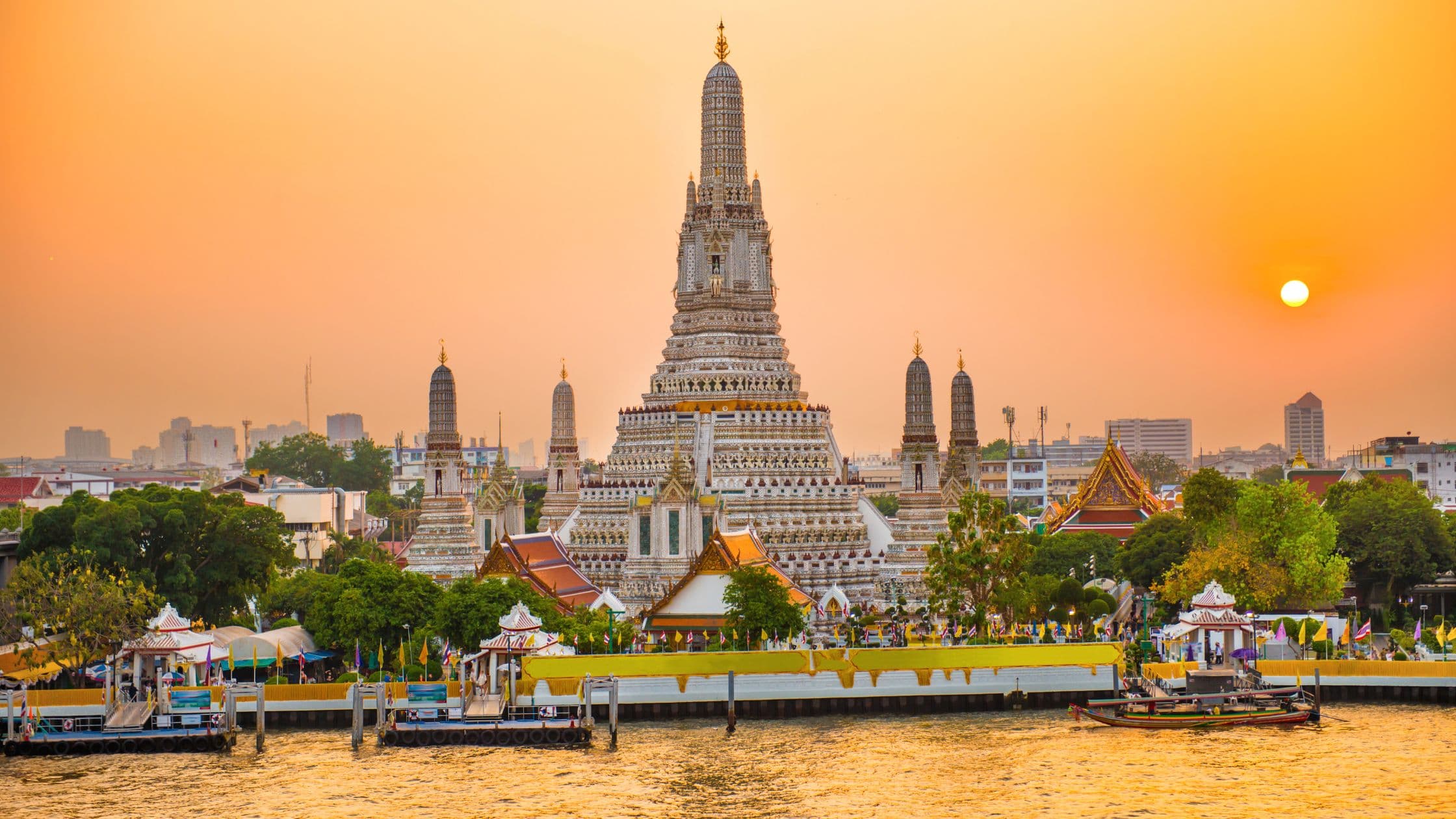
Bangkok is the deepest and most liquid property market in Southeast Asia. Roughly nine million residents anchor a metropolis where the BTS Skytrain and MRT subway have, over two decades, redrawn the map of where people live and where landlords find tenants. Foreign capital flows through the city continuously — from Hong Kong family offices, Singaporean investors, Japanese and Korean expats, and a steadily growing cohort of European and American long-stay buyers.
What distinguishes Bangkok from other Asian capitals is the combination of a clearly written foreign-ownership statute, a large pipeline of freshly built condominium stock, and yields that, while no longer at the highs of the 2010s, remain defensible in a low-interest world. A two-bedroom unit on a walkable street near a BTS station, bought with care, still pays its way.
The Thai condominium statute is unusually clear. The trouble is rarely the law — it is the documents people sign in the lobby before they have read it.
02
The foreign-ownership rules
Thai law allows non-residents to own a condominium unit outright, on a freehold basis, in their own name, with the same title as a Thai national. There is no restriction on how many units a foreigner may own. There is one structural rule: no more than 49 percent of the total saleable floor area of any given condominium building can be held by foreigners at any time. This is the so-called foreign quota.
When a project is launched, the developer tracks the quota and allocates units to foreign buyers first-come-first-served. In older buildings, the foreign quota may already be full, in which case a foreign buyer can still acquire the unit on a long-term lease — typically 30 years, often with one or two contractual renewals.
Freehold versus leasehold
Freehold ownership of a condominium unit is the strongest legal position available to a foreigner in Thailand. The title deed (chanote) is issued in the buyer's name at the Land Department. The unit can be sold, mortgaged, bequeathed and rented out, subject to building rules and tax rules described below.
Leasehold is a contractual right of use, registered at the Land Department for terms up to 30 years. Beyond 30 years, Thai courts have historically refused to enforce pre-agreed extensions automatically — though renewal clauses are common, the renewal is, in practice, a fresh agreement at the time of expiry. Sophisticated buyers either secure freehold or accept the renewal risk consciously, ideally with corporate structuring around the lessor.
Land and houses
A foreigner cannot own land in Thailand in their own name, with very narrow exceptions. Detached houses and townhouses are therefore acquired through one of three structures: a long-term lease on the land combined with freehold ownership of the superstructure; a Thai limited company in which the foreigner is a minority shareholder; or a Thai spouse holding the land with the foreign partner registering a usufruct or 30-year lease.
Each of these is workable. Each has been misused. Latitude's editorial position is that single-detached-house ownership in Bangkok is not the right entry point for a first foreign acquisition. The condominium route is cleaner, more liquid and avoids the structural risks that grey-market nominee companies invite.
Bangkok directories
Service providers in Bangkok
A curated directory of professionals serving foreign property buyers in Bangkok — specialists in property law, taxation, agency and visa advisory.
Real Estate Lawyer
Independent counsel for title review, FET compliance, foreign-quota verification and SPA negotiation.
Coming to the directory
Tax & Accounting
Bilingual advisors for personal tax residency, rental reporting, transfer duties and exit planning.
Coming to the directory
Property Agent
Agents focused on foreign-quota condominium stock and branded residences in central Bangkok.
Coming to the directory
Visa Consultant
Specialists for LTR, Elite, DTV and retirement visas, including the property-linked acquisition routes.
Coming to the directory
04
The districts that hold value
Bangkok is not one market. It is half a dozen sub-markets, each with its own buyer pool, rental dynamic and resale character. The areas below cover where most foreign capital concentrates and where Latitude expects to focus our directory and editorial coverage.
Phrom Phong
Sukhumvit · the expat family centre. The traditional foreign-residential heart of Bangkok. Anchored by the EmQuartier and EmSphere malls and BTS station E5, Phrom Phong is the centre of gravity for Japanese, Korean and European expat families. Rental demand from corporate relocations is consistent. Resale liquidity is the best in the city. Foreign quota fills quickly on new launches.
Thong Lor
Sukhumvit · the creative-class strip. Denser, louder, more culinary. Soi Sukhumvit 55 and its tributaries host Bangkok's strongest restaurant, bar and design-studio scene. Newer towers offer smaller floor plates and higher price-per-square-metre than Phrom Phong. Yields are competitive on the secondary market; pre-sale premiums have historically been steep.
Ekkamai
Sukhumvit · the quiet middle ground. BTS E7, sits between Thong Lor and the eastern Sukhumvit corridor. Softer pricing than its immediate neighbours, with a quieter residential character and a strong Japanese community around Soi 10 and 12. Among the most balanced yield-to-quality ratios in central Bangkok over the last five years.
Chit Lom and Ploen Chit
The embassy quarter · Bangkok's ultra-premium address. Between the Ratchaprasong shopping junction and the Sukhumvit corridor proper, anchored by Central Embassy, Central Chidlom and Gaysorn Village on one side and the British, Swiss and American embassies on the other. 98 Wireless, Sindhorn Residences, 185 Rajadamri, the Athenee Residence and the Magnolias Ratchadamri are among the addresses that change hands quietly at price points the rest of the city does not touch. Yields modest (3–4% gross), resale liquidity at the top exceptional.
Sathorn and Silom
Central business district · corporate long-stay. Bangkok's primary financial spine. Sathorn caters to long-stay corporate residents, with embassies and international schools nearby. Silom is louder, more weekend-oriented and benefits from the BTS-MRT interchange at Sala Daeng / Si Lom. Moderate yields, low tenant turnover, suited to buy-and-hold investors.
Ratchadaphisek and the MRT Blue Line corridor
The maturing mid-market. Materially lower entry prices than Sukhumvit with reliable Thai-tenant demand. Foreign quota fills more slowly here, which can be an advantage for buyers entering late in a launch cycle. Better suited to yield-driven investors than to family-relocation buyers — international schools are a longer commute.
Ari and Sanam Pao
Bangkok's creative pocket. BTS N5. Magnet for Bangkok's design-led independent restaurants and a younger professional population. New condo launches are tightly priced and resales are firm. Supply pipeline is thin compared with Sukhumvit, which has helped resale values. A small but high-quality submarket.
Riverside — Charoen Nakhon, Khlong San
The Chao Phraya · premium branded residences. The premium end of the new-build market. Four Seasons, Mandarin Oriental, Capella and the ICONSIAM-adjacent towers have created a riverside enclave with prices that comfortably exceed Sukhumvit. Yields are lower; resale liquidity at the top of the market is strong, particularly for branded inventory. For UHNWI buyers, this is where Bangkok's trophy stock concentrates.
05
Visa options that pair with property
Acquiring a condominium in Bangkok does not automatically confer the right to live in Thailand. Property ownership and immigration status are governed by separate laws. The following are the visa routes most relevant to long-stay foreign owners.
Long-Term Resident (LTR) Visa
A ten-year visa created to attract wealthy global citizens, retirees, remote-working professionals and highly skilled workers. Wealthy applicants typically demonstrate USD 1 million in assets and USD 80,000 in annual income, plus an investment of USD 500,000 in Thai government bonds, FDI or Thai property. The LTR offers a 17 percent personal income tax cap on foreign-earned income for qualifying categories and a one-stop service for renewals.
Thailand Privilege (Elite) Visa
A privately marketed long-stay membership offering five, ten, fifteen or twenty year multi-entry visas, with airport fast-track, immigration assistance and a fee paid upfront. Useful for buyers who want a settled long-stay status without committing to a tax-resident structure. The programme was significantly restructured in 2023; current membership tiers and pricing should be verified before application.
Destination Thailand Visa (DTV)
Introduced in 2024 for remote workers, soft-power participants and freelancers. Five-year multi-entry, with stays of up to 180 days per entry. The lowest-friction option for digital workers who do not need permanent tax residency.
Retirement (Non-Immigrant O / O-A)
For applicants aged 50 and above. Requires either a Thai bank deposit of THB 800,000 or a monthly income of THB 65,000, plus mandatory health insurance for the O-A variant. Renewed annually. Long-established, well understood by immigration officers and the most common route for retired foreign owners.
06
The buying process, step by step
A clean Bangkok condominium acquisition by a foreign buyer runs as follows. Variations exist — particularly on developer pre-sales versus secondary market resales — but the spine of the process is consistent.
- Reservation. The buyer signs a reservation agreement and pays a refundable or partly-refundable reservation fee (typically THB 50,000 to 200,000).
- Due diligence. An independent lawyer (not the developer's) reviews the title, the chanote, the condominium juristic person, the foreign quota, debt against the unit, building inspection, and the sale and purchase agreement.
- Sale and Purchase Agreement (SPA). Signed after due diligence. A deposit of 10 to 30 percent is customary.
- Foreign Exchange Transaction form (FET). Required for foreign buyers funding from abroad. Funds must be remitted into Thailand in foreign currency, converted at a Thai bank into Baht, and a FET document obtained from the bank for every transfer above USD 50,000 equivalent. The FET is the foundational evidence the Land Department uses to register foreign ownership.
- Transfer at the Land Department. Both parties (or their attorneys, by power of attorney) attend the Land Department, settle transfer fee, specific business tax, withholding tax and stamp duty, and receive the chanote in the buyer's name.
Total elapsed time for a secondary purchase is typically four to eight weeks. Pre-sale acquisitions extend across the construction period of the project, with payment milestones set by the developer.
07
Taxes and recurring costs
The Thai tax framework around property is relatively contained. There is no annual property tax in the way Anglo-American buyers might expect. There is, however, a one-time set of transfer taxes, an annual common-area fee paid to the condominium juristic person, and tax on rental income.
- Transfer fee: 2 percent of the appraised value, typically split equally between buyer and seller by custom (negotiable).
- Specific Business Tax (SBT): 3.3 percent of the appraised or contract value if the seller has owned the unit for less than five years. Replaced by stamp duty of 0.5 percent if the holding period exceeds five years.
- Withholding tax: A graduated personal income-tax withholding on the seller, calculated on the appraised value and seller's holding period.
- Common-area fees: Typically THB 40 to 80 per square metre per month, paid annually to the juristic person of the building.
- Rental income tax: Net rental income is taxed at Thai personal income tax rates (progressive, up to 35 percent), with standard deductions and expense allowances.
08
Common pitfalls
Most failed Bangkok transactions share the same pathologies. None of them are subtle. All of them are avoidable.
Nominee structures for land
Using Thai nominee shareholders in a Thai limited company to hold land is illegal and increasingly enforced. The Land Department has tightened scrutiny over the last decade. Buyers who walked into this structure in the 2010s now face difficult exit decisions.
Pre-sales by unproven developers
Bangkok has dozens of reputable developers — Sansiri, Ananda, Origin, AP Thai, Pace, Magnolia and others. It also has a long tail of smaller operators whose projects have been delivered late, half-finished, or never completed. Pre-sale deposits in failed projects are difficult to recover. Verify the developer's track record before paying a deposit. Latitude maintains a directory of Bangkok's major condominium brands with parent-developer details for cross-reference.
FET documentation gaps
Without a properly issued Foreign Exchange Transaction form, the Land Department will refuse to register foreign ownership. This is the single most common reason transfers stall at the closing table. The fix is procedural but slow. Insist on FET-compliant remittance from day one.
Building age and sinking fund
Older Bangkok condominiums (pre-2005) often have undercapitalised sinking funds and deferred maintenance. Review the juristic person's accounts, the last three years of meeting minutes, and the maintenance schedule before buying anything older than fifteen years.
09
Rentals and yields
Bangkok yields have compressed from the 7 to 8 percent ranges of the early 2010s to 4 to 6 percent in 2026, broadly in line with comparable Asian capitals. Yields above 6 percent gross are achievable in well-chosen secondary-market units near BTS stations, particularly outside the prime Sukhumvit blue-chip corridor.
Short-term and daily rentals (Airbnb-style) are restricted by the Hotel Act in most condominium buildings. Most juristic persons enforce a 30-day minimum stay. Buyers underwriting yields on a short-stay model should expect that model to be materially harder to operate from a regulatory standpoint than long-term lettings.
10
Schools and family relocations
For families relocating to Bangkok, school catchment is often the determining factor for neighbourhood choice. The international-school options are deep: NIST International School (Sukhumvit), Bangkok Patana School (Bangna), Shrewsbury International School (Riverside), International School Bangkok (Nichada Thani), Harrow International (Don Mueang) and Brighton College (Krungthep Kreetha) are among the most established. Each pulls residential demand toward a specific radius — and that demand pattern shows up cleanly in rental yields.
11
Common questions about Bangkok property
A condensed reference for the questions Latitude is asked most often by foreign buyers approaching Bangkok for the first time.
- Can a foreigner own a condominium in Bangkok?
- Yes. A foreigner may own a condominium unit on a freehold basis, in their own name, with the same title as a Thai national. Each building has a 49 percent foreign-ownership quota measured by floor area. When the quota is full, foreign buyers acquire on a 30-year leasehold instead.
- Can foreigners own land in Thailand?
- No. Foreigners cannot own land in Thailand in their own name, with narrow exceptions for certain investment programmes rarely practical in Bangkok. Houses and townhouses are typically acquired through a long-term land lease combined with freehold ownership of the building, or via a properly structured Thai company.
- What is the foreign quota in Thai condominiums?
- The Thai Condominium Act limits foreign ownership in any single building to 49 percent of the total saleable floor area. The developer tracks this on a first-come basis. Once the quota is full, additional foreign purchases proceed on a long-term lease rather than freehold title.
- Is leasehold or freehold better for foreign buyers in Bangkok?
- Freehold is the stronger legal position and the preferred route whenever the foreign quota is available. Leasehold for 30 years is common in older or quota-full buildings, often with optional renewal clauses. Renewals are legally a fresh agreement at the time of expiry rather than an automatic extension.
- What is the minimum property price for foreigners in Bangkok?
- There is no statutory minimum price for condominiums purchased by foreigners. In practice, central Bangkok freehold condos start around THB 4 to 6 million for a one-bedroom in established corridors, rising to THB 100 million and above for branded riverside residences.
- What taxes apply when buying property in Bangkok?
- A 2 percent transfer fee, a 3.3 percent specific business tax if the seller has held the unit under five years (otherwise a 0.5 percent stamp duty), and graduated withholding tax on the seller. Annual costs are limited to common-area fees and personal income tax on rental income.
- Can foreigners get a mortgage in Thailand?
- Very rarely from Thai banks. UOB Thailand and a few foreign-owned banks offer limited mortgage products to certain non-resident buyers, typically requiring 30 to 50 percent down payment and documented Thailand-linked income. Most foreign buyers transact in cash through inbound FET-compliant transfers.
- What visa do I need to live in my Bangkok property?
- Property ownership does not confer residency. The most relevant routes are the Long-Term Resident (LTR) Visa for wealthy applicants, the Thailand Privilege (Elite) Visa for premium long-stay, the Destination Thailand Visa (DTV) for remote workers, and the Non-Immigrant O / O-A Retirement Visa for applicants aged 50 and above.
- What are the best areas for foreign buyers in Bangkok?
- For expat families: Phrom Phong, Thong Lor and Ekkamai. For premium and embassy-adjacent buyers: Chit Lom and Ploen Chit. For corporate long-stay: Sathorn and Silom. For yield-driven investors: Ratchadaphisek along the MRT Blue Line. For trophy assets: the Chao Phraya riverside.
- How long does the buying process take in Bangkok?
- A secondary-market acquisition typically completes in four to eight weeks. It covers reservation, independent legal due diligence, signed Sale and Purchase Agreement, Foreign Exchange Transaction documentation, and registration at the Land Department. Pre-sale purchases extend across the project's construction period with milestone payments.
- What is a Foreign Exchange Transaction (FET) form and why do I need it?
- The FET is a bank-issued document confirming that funds for the property arrived in Thailand in foreign currency above USD 50,000 equivalent. The Land Department requires it before registering condominium ownership in a foreigner's name. Missing or incorrect FET documentation is the most common cause of failed transfers.
- Can I rent out my Bangkok condo as a foreigner?
- Yes for long-term rentals. Most condominium juristic persons enforce a 30-day minimum stay under the Thai Hotel Act, which effectively prohibits Airbnb-style short-term rentals in the majority of buildings. Long-term leases to expat tenants are unrestricted and are the standard rental model for foreign owners.
Postscript
A short editorial postscript
Bangkok rewards the patient buyer. The market has matured meaningfully — it is no longer the frontier opportunity of the early 2010s, but neither is it an exhausted one. The best acquisitions Latitude has seen in the last five years share three traits: they were bought on a BTS or MRT walking radius; they were bought through a properly documented foreign-quota route, with FET in order; and they were bought after independent legal review.
Everything else — the building's name, the developer's marketing, the view from the 42nd floor — is decoration. The substance of a good Bangkok acquisition is the documentation behind it.
Other Thailand destinations
Phuket
Villas, beachfront condos and branded residences on Thailand's largest island.
Coming soon
Koh Samui
Sea-view villas, wellness retreats and the boutique side of southern Thailand.
Coming soon
Pattaya
Highest condo yields in Thailand, marina-lifestyle and the EEC growth corridor.
Coming soon
Chiang Mai
Long-stay culture, the digital nomad hub and a slower Thai north.
Coming soon