
Chiang Mai · Foreign Buyer Guide
Buying property in Chiang Mai as a foreigner
Thailand's slow-living capital, a long-stay visa epicentre, and Asia's quiet creative city. A complete editorial guide for the foreign buyer.
01
Why Chiang Mai still matters
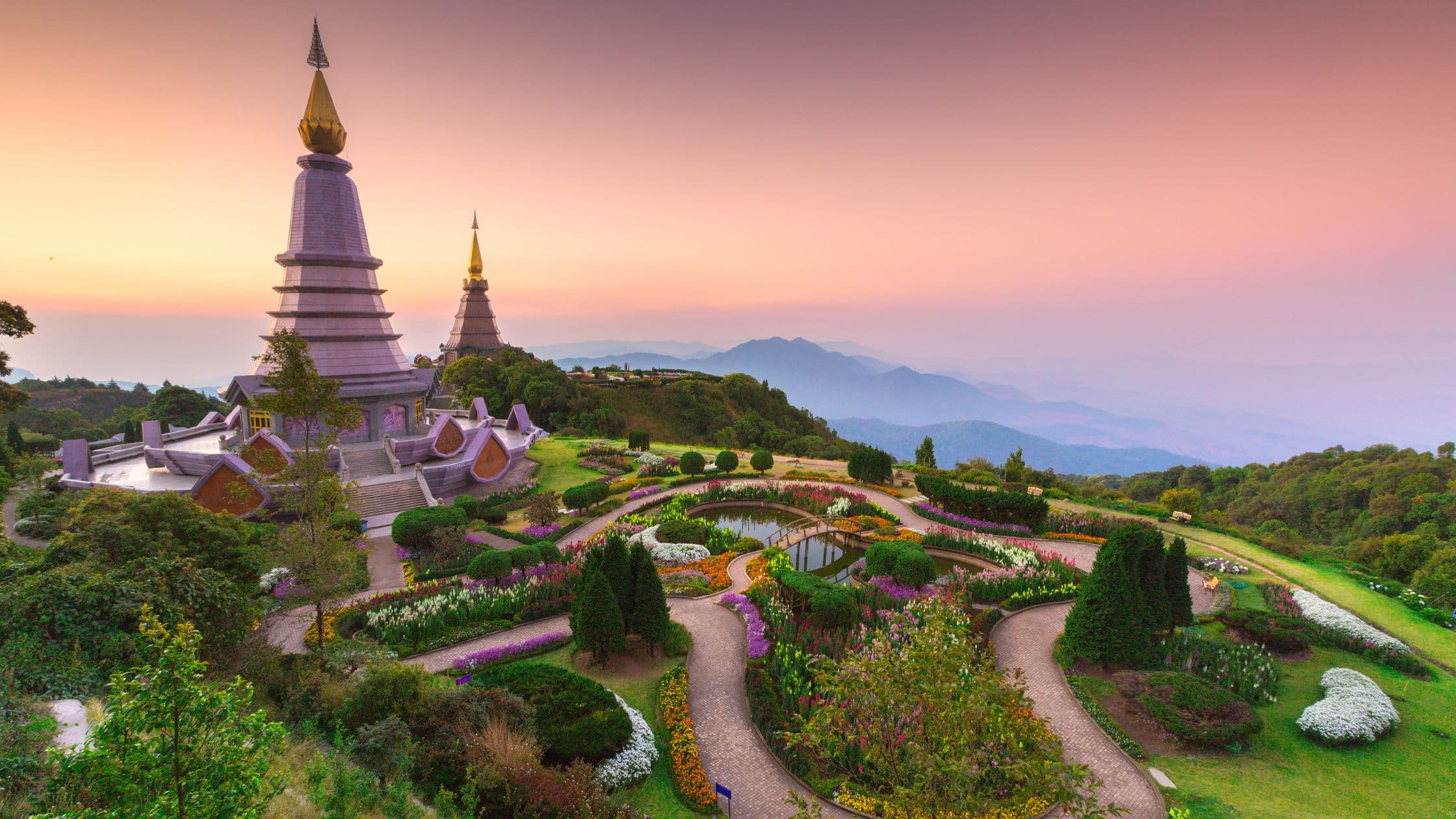
Chiang Mai sits at the heart of Thailand's mountainous north and has built one of Asia's most distinctive foreign-resident communities. The combination of a low cost of living, a year-round mild climate by Thai standards, a deep wellness and creative economy, and the highest density of international schools outside Bangkok has produced a city that disproportionately attracts long-stay foreign residents rather than holiday-home buyers or short-stay tourists.
What sets Chiang Mai apart in the Thai property landscape is the dominance of urban condo and detached-house product over beachfront villa. Foreign buyers in Chiang Mai are typically buying a base from which to live and work, not a yield instrument or a holiday home. The decision-making pattern resembles a relocation more than an investment.
The structural draws of the past five years have been the Long-Term Resident visa (which has scaled significantly, with Chiang Mai one of the highest LTR-holder concentrations outside Bangkok), the maturity of the Nimmanhaemin remote-worker economy, and an international school cluster that supports full-time foreign-family residency. The structural drag has been the smoke season, which has reshaped how some foreign residents think about their year.
Chiang Mai buyers are choosing a city, not a property. That makes them slower, more thoughtful and more location-specific than Bangkok or Phuket buyers. It also means the lawyer's job is easier when the documentation is clean.
02
The foreign-ownership rules
The Thai legal framework is identical across the country. Foreigners may own a condominium unit on freehold in their own name, subject to the 49 percent per-building foreign quota. In Chiang Mai's Nimmanhaemin condo cluster the quota is typically available in newer buildings but can be fully foreign-allocated in particularly desirable projects. Foreigners cannot own land directly. Villas and detached houses require long-term leasehold or a Thai company structure.
03
Condominium versus villa
The Chiang Mai condo and villa markets serve genuinely different buyers. Condos cluster in Nimmanhaemin and offer the simplest freehold purchase, walkable urban location and strong rental liquidity. They suit remote workers, shorter-stay buyers and investors looking for cleaner ownership mechanics. Pricing for new one-bedroom condominiums typically runs THB 2.5 million to 5 million, with select branded or boutique product reaching higher.
The villa market in the foothills
Villa product clusters in the northern foothills (Mae Rim, San Sai) and the southern Hang Dong corridor. These are detached single-storey or two-storey houses on land plots ranging from 200 square wah to several rai. Pricing for three-bedroom villas in established foreign-buyer estates typically runs THB 8 million to 18 million, with mountain-view or larger-plot product reaching higher. The villa market is structurally a long-stay family-residence market, not a yield play.
The Thai company structure for villas
In Chiang Mai the long-term lease and Thai-company routes are both common for villa ownership. The Thai-company route is more common where the buyer has constructed bespoke product or acquired a substantial land plot. The same legal principles apply as elsewhere in Thailand: the foreigner holds 49 percent direct equity, controlling preference shares give board majority, and the company owns the land. Nominee Thai shareholders without genuine economic participation are illegal under current enforcement guidance. Use specialist counsel.
04
The corridors that hold value
Chiang Mai foreign-buyer interest concentrates in five broad corridors. Nimmanhaemin and the Old City form the urban core. Mae Rim, San Sai and Hang Dong host the foothill villa estates around the metropolitan periphery. Wat Ket on the east bank of the Ping river is a smaller boutique corridor.
Nimmanhaemin
The urban foreign-buyer core. Nimmanhaemin, west of the Old City moat, is the densest concentration of new condominium development and the centre of the remote- worker and digital-nomad community. Cafés, co-working spaces, Maya shopping mall and Chiang Mai University at the western edge anchor the corridor. Pricing for one-bedroom condos in newer Nimmanhaemin buildings runs THB 2.5 million to 5 million; two-bedroom and premium product reaches higher. Rental yields here are the strongest in Chiang Mai.
Inside the Old City moat
The heritage core. The square Old City inside the moat is dominated by temples, guesthouses, boutique hotels and the Sunday night market. Limited foreign-buyer residential interest. Some heritage shophouses and small boutique condominiums exist; pricing varies widely. Better suited to specific lifestyle buyers wanting to live inside the moat than to mainstream foreign-buyer acquisition.
Wat Ket and the east bank
The east-bank boutique corridor. Wat Ket on the east bank of the Ping river hosts boutique residential product, heritage architecture and a quieter pace than Nimmanhaemin. A smaller foreign-buyer community here is drawn by the riverside character. Pricing is varied; niche play.
Mae Rim and the northern foothills
The northern villa corridor.Mae Rim, twenty kilometres north of Chiang Mai centre, sits in the foothills of the northern mountains. The corridor hosts Prem Tinsulanonda International School (one of Thailand's most established international boarding schools), the Four Seasons Resort, and a growing cluster of villa estates. Mountain views, cool climate, genuinely residential pace. Pricing for three-bedroom villa estates typically runs THB 10 million to 25 million.
San Sai and the east
The eastern villa corridor. San Sai district east of Chiang Mai hosts a substantial villa-estate market, often built around small lake or park amenities. Pricing is comparable to Mae Rim, with some entry-tier product slightly lower. Strong foreign-resident family presence, particularly around the international school cluster.
Hang Dong and the south
The southern suburban corridor.Hang Dong south of the city has developed over the past fifteen years into Chiang Mai's most active modern suburban villa-estate corridor. Mountain views toward Doi Suthep, new shopping infrastructure (Promenada, Central) and a growing dining scene. Pricing for new three-bedroom villas in branded estates typically runs THB 8 million to 20 million.
05
Visa options, with LTR up front
Chiang Mai has the highest LTR visa-holder concentration in Thailand outside Bangkok. For high-income foreign buyers under 50 or working remotely, the LTR is the strongest option and meaningfully changes the calculation of basing in Chiang Mai.
Long-Term Resident (LTR) Visa
Ten-year multi-entry visa for high-income foreigners, including remote workers earning over USD 80,000 annually for two consecutive years, retirees with USD 80,000 annual passive income, and several further categories. Includes a digital work permit, a flat 17 percent personal income tax on Thai-source income for qualifying skilled professionals, and overseas income tax exemptions for several categories. Particularly well-suited to remote-working Chiang Mai foreign residents.
Retirement visa
Available to applicants aged 50 and over, with a Thai bank balance of THB 800,000 or proof of THB 65,000 monthly income. Annual renewal. Common among the established Chiang Mai retirement community.
Thailand Privilege visa
Membership-based long-stay programme. Fees from approximately THB 900,000 for 5 years to several million baht for 20-year memberships. A common fallback for buyers who do not meet LTR or retirement thresholds.
06
The buying process
A Chiang Mai purchase typically runs four to eight weeks from signed reservation to title transfer at the Chiang Mai Provincial Land Office. The steps are the standard Thai sequence: reservation agreement, due diligence by Thai counsel, sale and purchase agreement, Foreign Exchange Transaction Form for freehold condo purchases (required to certify foreign-sourced funds), and Land Office transfer.
Chiang Mai has a sufficient pool of specialist foreign-buyer counsel. Latitude maintains a curated directory of trusted lawyers, tax advisors, visa consultants and other service providers in our Bangkok directory (the Bangkok-based firms cover Chiang Mai too); a dedicated Chiang Mai service provider directory is in production.
07
Taxes and recurring costs
Chiang Mai taxes are the same as the rest of Thailand. The one-time costs at purchase are the transfer fee (2 percent of Land Office assessed value), stamp duty or specific business tax, and withholding tax on the seller side. Annual recurring costs include the Land and Building Tax (single-digit per thousand on assessed value), common-area fees for condos and villa estates, and personal income tax on rental income.
08
Common pitfalls
Underestimating smoke season impact. The January-to-April burning season is the single most significant lifestyle constraint of Chiang Mai. Foreign buyers who plan to live there full-time should weigh this seriously, ideally by spending a smoke-season month in Chiang Mai before committing capital.
Unregistered leases. Long-term leases must be registered at the Chiang Mai Provincial Land Office to be enforceable beyond three years. Always verify registration documentation.
Older condominium common areas.Some older Chiang Mai condominium buildings, particularly those built during the 2000s expansion, have under-funded common-area maintenance budgets. Verify the building's sinking fund and pending major repairs.
Villa land plot boundaries.In foothill estate developments, verify the actual surveyed boundaries of the land plot, not just the developer's marketing plan. Plot-boundary disputes between adjacent estates have occurred and are time-consuming to resolve.
Nominee Thai shareholders. Using nominees in Thai company structures (Thai nationals without genuine economic participation) is illegal under current enforcement guidance. Use specialist counsel to either structure genuine Thai participation or use the long-term lease route.
09
Rentals, yields and the long-stay model
Chiang Mai rental economics work best for long-stay residential rather than short-stay tourist rentals. Nimmanhaemin condominiums typically deliver 4 to 6 percent gross yield for long-stay residential rental (one-year lease terms, predominantly foreign-resident tenant base). Short-stay yield is constrained by the smoke-season window and by hotel competition.
Villa rentals in the foothill corridors run 3 to 5 percent gross yields, typically with two-year or three-year tenancy terms to long-stay foreign-family tenants. Owner-occupier ownership dominates the foothill segment.
Overall Chiang Mai yields are lower than Phuket or Samui but more stable, with less seasonal volatility and a year-round tenant pool. The case for Chiang Mai is primarily lifestyle and long-stay; yield is a secondary consideration.
10
Schools, smoke season and lifestyle
Chiang Mai hosts one of Thailand's deepest international-school clusters outside Bangkok. Prem Tinsulanonda International School (Mae Rim, IB curriculum, boarding option), Lanna International (American curriculum), NIS International School (IB), Chiang Mai International School and several further institutions support full-time foreign-family residency.
Medical infrastructure includes Chiang Mai Ram Hospital, Bangkok Hospital Chiang Mai and Maharaj Nakorn Chiang Mai Hospital (the teaching hospital associated with Chiang Mai University Medical School). Strong overall foreign- resident medical infrastructure with referrals to Bangkok for complex cases.
Smoke season, addressed directly
Annual agricultural burning across Northern Thailand and the adjacent Burmese and Lao corridors produces severe air pollution in Chiang Mai from January through April. Particulate matter readings frequently reach the worst globally during this window. The smoke season has reshaped how many long-stay foreign residents structure their year, with some shifting to seasonal residence patterns (Chiang Mai November through January, away during burning season).
Property buyers should weight this realistically. Newer condominium buildings with sealed-envelope HVAC and air-purification can mitigate the indoor impact. Outdoor lifestyle constraints during smoke season are real and not solvable by air-purifiers. Allocating three months a year elsewhere is a common Chiang Mai foreign-resident pattern.
Lifestyle infrastructure
Outside smoke season, Chiang Mai delivers one of Asia's most distinctive lifestyle propositions. A deep café and slow-food scene, a strong creative and arts community, year-round outdoor activity in the surrounding mountains, an active wellness and yoga cluster, and a calmer pace than any coastal Thai destination. The city's creative economy and the Chiang Mai University presence give it an intellectual and cultural depth absent from holiday-home Thai destinations.
11
Common questions about Chiang Mai property
- Can a foreigner own property in Chiang Mai?
- Yes. The Thai legal framework applies. Foreigners can own a condominium unit outright on freehold, subject to the 49 percent per-building foreign quota. Foreigners cannot own land directly, so houses and villas are acquired through long-term leasehold structures or via a properly structured Thai company.
- Is Chiang Mai a condo market or a villa market?
- Both. The Nimmanhaemin corridor west of the Old City moat hosts the densest new condominium development, popular with foreign buyers seeking freehold simplicity and a walkable urban location. The northern foothills around Mae Rim, the east toward San Sai, and the south toward Hang Dong host the villa and detached-house market, popular with longer-stay foreign residents and families.
- Why is Chiang Mai a remote-worker hub?
- Chiang Mai has built one of Asia's deepest remote-worker communities over the past decade. The combination of low cost of living, year-round mild weather by Thai standards, fast internet, a deep café and co-working infrastructure (concentrated around Nimmanhaemin), and the Long-Term Resident visa programme has made Chiang Mai a structural draw for international remote workers and digital businesses. The remote-worker community has reshaped the Nimmanhaemin condo market in particular.
- What is the LTR visa and why does it matter in Chiang Mai?
- The Long-Term Resident visa is a 10-year multi-entry visa for high-potential foreigners, including remote workers earning over USD 80,000 annually. It includes a digital work permit and tax advantages. For Chiang Mai foreign residents working internationally while based in Thailand, the LTR is the strongest current visa option. Chiang Mai has one of the highest LTR holder concentrations in Thailand outside Bangkok.
- What is smoke season and does it affect property values?
- From January through April each year, agricultural burning across Northern Thailand and neighbouring countries produces severe air pollution in Chiang Mai. Particulate matter (PM2.5) frequently reaches the worst levels globally during this window. The smoke season has affected both Chiang Mai's tourism and its long-stay foreign-resident appeal over the past decade. Some foreign buyers have shifted toward seasonal residence patterns (Chiang Mai outside smoke season, elsewhere during). Long-term values have softened in some condo segments where smoke season concerns are pronounced. Buyers should weight this realistically into their decision.
- What yields can a Chiang Mai property generate?
- Gross rental yields on Nimmanhaemin condominiums typically run 4 to 6 percent for long-stay residential rental, with some short-stay holiday yield available in peak season (November through February). Net yields after management fees and tax usually settle 3 to 5 percent. Villas in the foothills typically generate lower yields (3 to 5 percent gross) but with strong long-stay tenant demand from foreign families. Yields are generally lower than Phuket or Samui but more stable than Hua Hin.
- What taxes apply when buying property in Chiang Mai?
- Same as the rest of Thailand. A 2 percent transfer fee, 0.5 percent stamp duty or 3.3 percent specific business tax (the latter when the seller has held the property under five years), and graduated withholding tax on the seller. Annual costs include the Land and Building Tax, common-area fees, and personal income tax on rental income.
- Where do foreign buyers typically purchase in Chiang Mai?
- Nimmanhaemin for condominiums and walkable urban living. Mae Rim and San Sai for villa estates and family residences in the foothills. Hang Dong for newer suburban-style villa product. The Old City moat is dominated by heritage and tourism rather than residential property. Wat Ket on the east bank of the Ping river is a smaller boutique foreign-buyer corridor with heritage character.
Other Thailand destinations
Bangkok
The deepest condo market in Southeast Asia and the foreign-buyer capital of Thailand.
Read guide →
Phuket
The Andaman flagship: branded residences, west-coast villas and Thailand's deepest foreign-buyer market.
Read guide →
Koh Samui
Gulf-coast island living, freehold villas and the post-quota condo wave.
Read guide →